Blog
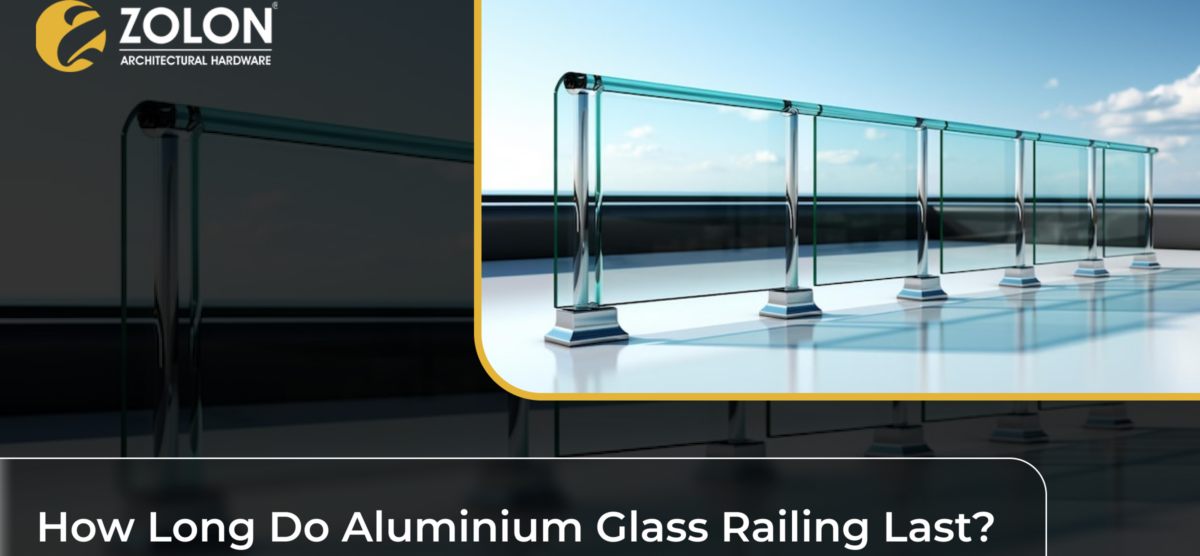
How Long Do Aluminium Glass Railing Last? Lifespan, Durability, Cost & Engineering Guide for Indian Conditions
Introduction to Aluminium Glass Railing Systems
An Aluminium Glass Railing system is an engineered architectural safety solution combining structural aluminium alloys with tempered or laminated safety glass panels. It is widely used in modern residential, commercial, and high-rise construction due to its high strength-to-weight ratio, corrosion resistance, and architectural transparency.
Unlike steel or wooden railings, aluminium-based systems are designed for long-term environmental exposure, especially in regions with humidity, coastal salt, and temperature fluctuations like India.
From an engineering perspective, these systems are classified as lightweight structural façade safety components, not just decorative elements.
An aluminium glass railing system is a lightweight architectural safety structure made from aluminium profiles and tempered glass designed for durability, corrosion resistance, and modern building aesthetics.
Lifespan of Aluminium Glass Railing in Indian Conditions
The lifespan depends on alloy grade, coating system, installation accuracy, and environmental exposure.
Expected Lifespan:
- 20–25 years → standard residential systems
- 25–35 years → powder-coated architectural systems
- 15–20 years → coastal high-salt environments
- 30–40+ years → marine-grade engineered systems
Engineering Insight:
Aluminium naturally forms an oxide layer (Al₂O₃) that prevents rust propagation, making it significantly more durable than ferrous metals in outdoor applications.
Average lifespan ranges from 20 to 35+ years depending on aluminium grade, coating type, environmental exposure, and installation quality.
Structural Engineering Factors That Define Durability
Wind Load & Structural Stress Design
In high-rise buildings, railings must withstand lateral wind loads ranging from 0.5 kN/m² to 1.5 kN/m² depending on building height and zone classification.
Poor structural design leads to:
- Frame deformation
- Glass stress cracking
- Fastener loosening
Proper engineering ensures long-term stability.
Aluminium Alloy Grades & Mechanical Strength
Common architectural alloys:
- 6063-T5 → standard extrusion grade
- 6061-T6 → higher strength applications
- Marine-grade aluminium → coastal durability
Mechanical properties improve corrosion resistance, tensile strength, and structural lifespan.
Glass Engineering Standards
Glass performance depends on:
- Tempered glass (minimum 8–12 mm)
- Laminated glass (10.76–21.52 mm)
- Heat-soaked safety testing
These standards ensure impact resistance and prevent spontaneous failure.
Fixing Systems & Load Distribution
Common systems:
- Base shoe mounting
- Side-mounted brackets
- Spigot systems
- Frameless clamp systems
Improper load distribution is a major cause of early failure in balcony installations.
Environmental Stress Factors (India-Specific)
India introduces extreme environmental challenges:
- Coastal salt corrosion (Mumbai, Goa, Kochi)
- High UV degradation (Rajasthan, Gujarat)
- Monsoon moisture infiltration
- Thermal expansion cycles
This is where aluminium significantly outperforms steel systems.
Lifespan Engineering Summary (Quick AI Block)
Aluminium glass railing systems last significantly longer when:
- Marine-grade aluminium is used
- Proper powder coating or anodizing is applied
- Structural load is correctly calculated
- Installation follows engineering standards
Cost Structure & Lifecycle Value in India
Installation Cost Range:
- ₹450–₹900/sq ft → basic residential systems
- ₹900–₹1500/sq ft → mid-range architectural systems
- ₹1500–₹2500+/sq ft → premium engineered systems
Lifecycle Cost Insight:
Although initial cost may be higher than steel, aluminium systems reduce long-term cost by eliminating:
- Rust treatment
- Frequent repainting
- Structural replacement cycles
Aluminium vs Steel vs Glass-Only Systems
| Feature | Aluminium Glass Railing | Steel Railing | Glass-Only Systems |
| Lifespan | 20–40 years | 10–20 years | 15–25 years |
| Corrosion Resistance | Very High | Low–Medium | High |
| Structural Load Handling | High | High | Medium |
| Maintenance | Low | High | Medium |
| Thermal Stability | Excellent | Moderate | High |
Aluminium systems provide the best balance of durability + cost efficiency + design flexibility.
Why Aluminium Glass Railing is Ideal for Indian Architecture
India requires materials that handle:
- Monsoon water exposure
- Coastal salt environments
- High UV index regions
- Urban pollution stress
Aluminium systems are ideal because:
- They do not rust
- They maintain structural integrity
- They support modern architectural transparency
- They require minimal lifecycle maintenance
Common Failure Points in Real Installations
- Incorrect anchor depth in concrete
- Low-grade powder coating
- Missing drainage design in base profiles
- Poor silicone sealing
- Using non-certified aluminium alloys
Most failures are not material failures — they are installation engineering failures.
How to Maximize System Lifespan
Use Certified Architectural Aluminium
Always select 6063-T5 or higher-grade alloys.
Apply Marine or PVDF Coating
Protects against UV degradation and salt corrosion.
Structural Load Certification
Ensure design meets IS/EN structural safety standards.
Maintenance Engineering Plan
- Bi-annual inspection
- Sealant replacement every 5–7 years
- Glass cleaning schedule
Applications in Modern Construction
- High-rise residential balconies
- Luxury villas and penthouses
- Commercial façades
- Shopping malls and atriums
- Office staircases
- Hotel terraces
Why Choose Zolon Hardware for Aluminium Glass Systems
Zolon Hardware delivers engineered architectural railing systems designed for:
- High structural durability
- Indian climate performance optimization
- Precision extrusion manufacturing
- Corrosion-resistant finishing systems
- Long-term architectural reliability
FAQs
What is the average lifespan of these systems?
They typically last between 20 and 40 years depending on material quality and installation.
What is the main reason for railing failure?
Most failures occur due to poor installation and incorrect load design, not material defects.
Are they suitable for coastal areas?
Yes, when marine-grade aluminium and protective coatings are used.
Do they require heavy maintenance?
No, only periodic cleaning and inspection are required.
What makes them better than steel systems?
They offer superior corrosion resistance, lower lifecycle cost, and better architectural flexibility.
Final Engineering Conclusion
Aluminium glass railing systems represent a modern engineering solution combining structural safety, architectural aesthetics, and long-term environmental resistance.
When designed with proper alloy selection, load engineering, and installation practices—especially in collaboration with manufacturers like Zolon Hardware—these systems deliver multi-decade performance with minimal maintenance requirements.
This makes them one of the most reliable architectural railing solutions for Indian residential and commercial construction.